

There’s a lot riding on your next inspection, and the margin for error isn’t just tight. In your industry, it doesn’t exist. You deserve a fabrication and inspection partner who understands what’s at stake, knows the code, and delivers a documentation package your QA team, your insurer, and your regulator can stand behind without hesitation.
At Boardman, that’s what our pressure vessel inspection services are built to do. Since 1910, we’ve worked alongside engineers, plant managers, and procurement teams. We’ve earned their confidence not with promises, but with process and accountability at every stage of the project. Ready to move forward with confidence? Our team at Boardman is ready when you are.
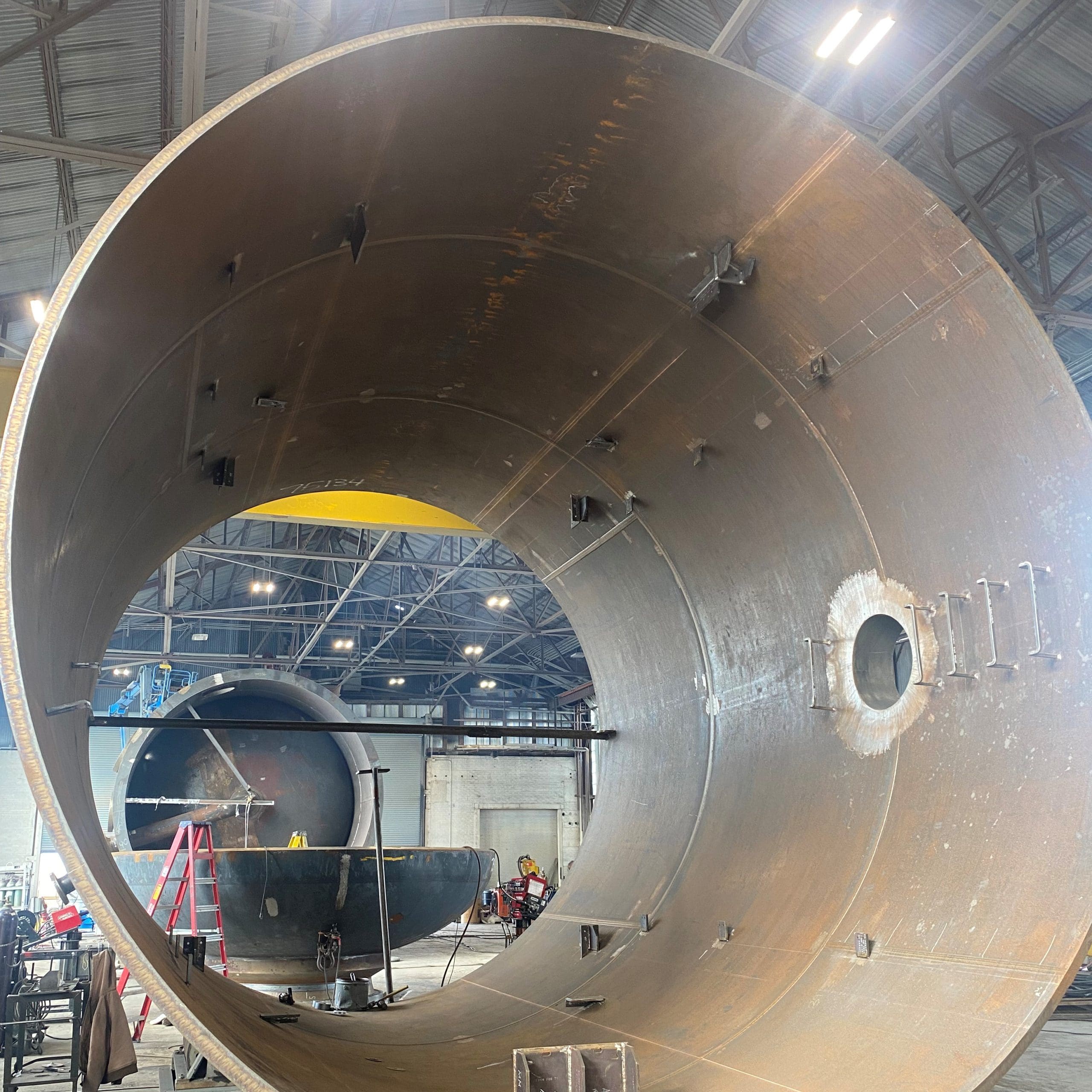
Understanding which division governs your vessel, and what that means for your inspection scope, is part of what Boardman brings to every project.
At Boardman, we hold both the National Board “U” Stamp and the National Board “R” Stamp, authorizations that directly attest to our ASME fabrication and repair capabilities. These are your assurance that the work performed on your vessel meets the code requirements that your compliance record depends on.
Your vessels don’t exist in isolation. They are part of a process, a schedule, and a compliance obligation. The inspection support our team at Boardman provides is designed to fit directly into that context.
Our Inspection and quality support includes:
Whether your project originates from Boardman’s designs or from your own drawings, inspection is part of the scope, not an afterthought.
You’re not just buying fabrication or inspection work. You’re buying a paper trail, one you can hand to your QA manager, your insurer, and your jurisdictional inspector without hesitation. Vague references to “thorough documentation” don’t hold up in a code audit. Your compliance record requires specifics.
Our Boardman documentation packages are built to support your compliance obligations and may include:
Every deliverable is organized, complete, and ready for review by your team or an external inspector. That’s not a courtesy. That’s the standard.
Vendor uncertainty is one of the most common reasons projects run into trouble. You start with a timeline and a spec, and somewhere in the middle, communication breaks down, and you’re chasing updates instead of making decisions.
Here’s how the Boardman process works:
Tell us what you need. We review your specifications, drawings, and timeline before anything else.
Your specs drive the work. Boardman can fabricate and inspect from your drawings or provide design support where needed.
Inspection is coordinated at every stage, from material receiving to testing. You have visibility throughout.
All certifications, test records, weld maps, and inspection reports are compiled into a complete package before delivery.
Nothing ships without a complete documentation package and final review. Your vessel arrives compliant and ready.
You stay informed at every step. No surprises. No chasing updates at the end of the week.

At Boardman, we support engineers, procurement teams, and plant managers across industries where vessel compliance is non-negotiable.
Here are the industries we proudly serve:
These industries share one thing in common: the cost of a compliance failure is too high to risk on the wrong partner.
At Boardman, we have been the right partner for engineers and procurement teams since 1910, and we’re ready to prove it on your next project.
When you evaluate a pressure vessel inspection company, certifications are not a detail. They are the foundation of the decision.
At Boardman, our team holds the following certifications:
These certifications represent the standards Boardman meets on every project, not just the ones that ask for it.
“Have known this company for a long time as we have provided services for their operations. Long history of a well run family business that does Specilaty work very few in USA can provide. Great group of people.”
Hormoz Pezeshkian, 5-Star Google Review
At Boardman, our field service team provides on-site inspection and repair support across Oklahoma, Texas, New Mexico, Colorado, Arkansas, Missouri, and Kansas. Our Shop fabrication and inspection are performed at Boardman’s 140,000-square-foot facility in Oklahoma City, OK.
Choosing the right inspection partner starts with asking the right questions. Here are the answers your team needs before the project begins, backed by Boardman’s process, certifications, and more than a century of fabrication experience.
A pressure vessel inspection services is a formal evaluation of a vessel’s condition, code compliance, and structural integrity. It typically includes visual examination, dimensional checks, weld review, and pressure testing. The goal is to verify that the vessel is safe to operate and meets applicable code requirements, such as those set by ASME or jurisdictional authorities.
ASME inspection requirements depend on the applicable code division and the vessel’s design parameters. Under ASME Section VIII, inspection is required during fabrication at defined hold points, including material review, weld inspection, and final hydrostatic or pneumatic testing before the vessel is stamped. ASME tank inspection requirements for in-service vessels are also governed by standards such as API 510, which applies to pressure vessels in refining and chemical processing environments. It’s important to confirm which standards apply to your specific application and jurisdiction.
An ASME-certified company follows documented quality procedures, uses qualified welders and inspectors, and maintains the records required to support code compliance at every stage. The work is not just performed, it is verified, documented, and traceable. That distinction matters when your regulator, insurer, or QA team asks for proof.
At minimum, look for ASME Section VIII authorization, National Board “U” Stamp for new construction, and National Board “R” Stamp for repairs and alterations. API and AWS certifications are also strong indicators of technical rigor. These certifications confirm that the fabricator operates under a documented quality management system and meets the code requirements your project demands.
Yes, in most cases. Repairs to ASME-stamped vessels must be performed by a company holding the National Board “R” Stamp, following National Board Inspection Code (NBIC) requirements. Qualified repairs, properly documented and inspected, allow the vessel to retain its code status. Unauthorized or non-compliant repairs can invalidate the stamp and create serious liability. Boardman holds the National Board “R” Stamp and adheres to NBIC repair requirements for all applicable projects.
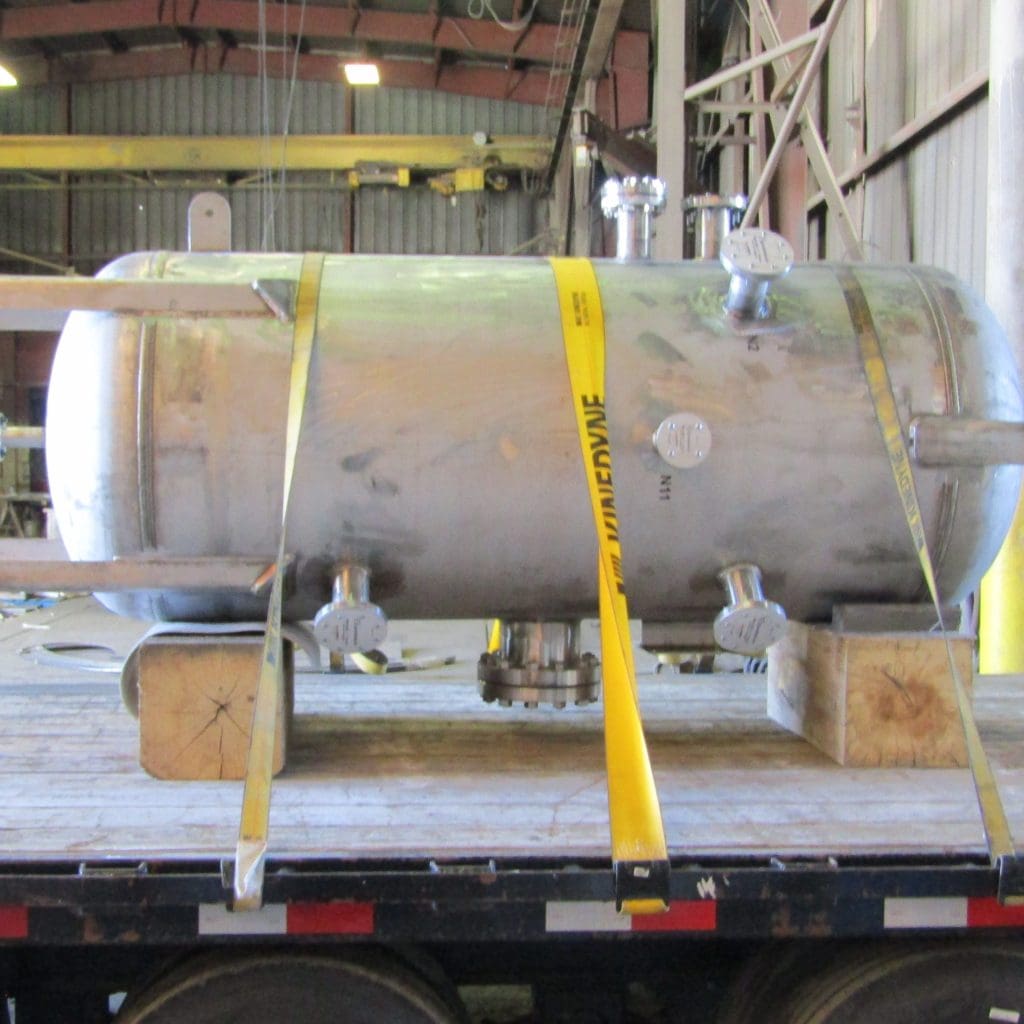
When there’s a vessel on your schedule that needs inspection support, fabrication, or repair, you need a partner who understands the code, manages the documentation, and communicates clearly from the first call to final delivery.
At Boardman, our pressure vessel inspection services are built around the accountability your project requires and the stewardship your team deserves. We’ve been doing this since 1910, and we bring that experience to every project, regardless of size or complexity.