
When your project calls for an ASME pressure vessel, trayed tower, column, or heavy plate assembly, carbon steel fabrication delivers the strength, weldability, and code compliance your application demands at a lower material cost than most alloy alternatives. Carbon steel can withstand high pressure and harsh environmental conditions, making it the ideal choice for these applications.
Boardman has been fabricating carbon steel equipment from its Oklahoma City facility since 1910, backed by ASME certifications, full documentation, and stewardship on every project.

Carbon steel is one of the most widely specified materials in industrial fabrication because it performs across a broad range of process conditions without the cost premium of higher alloys. Fabricators choose it for its machinability, ease of welding, and strength-to-weight ratio. HIC-resistant grades add confidence for wet H2S service environments common in refining and oil and gas.
It is generally a good fit when:
Contact Boardman to confirm whether carbon steel is the right call for your application.
Choosing between carbon steel and stainless steel comes down to your process conditions, not just cost. Use this quick reference for the most common decision points.
| Factor | Carbon Steel | Stainless Steel |
|---|---|---|
| Material cost | Lower | Higher |
| Corrosion resistance | Moderate, coating or lining may apply | Higher in corrosive or high-temperature service |
| Weldability | Excellent | Good, with more controlled procedures |
| Typical use | Drums, separators, towers, heavy plate | High-purity, high-corrosion, or hygienic service |
For many refinery and gas processing applications, carbon steel is the correct, code-supported choice. Your process conditions, design temperature and pressure, and project specification drive the final decision.
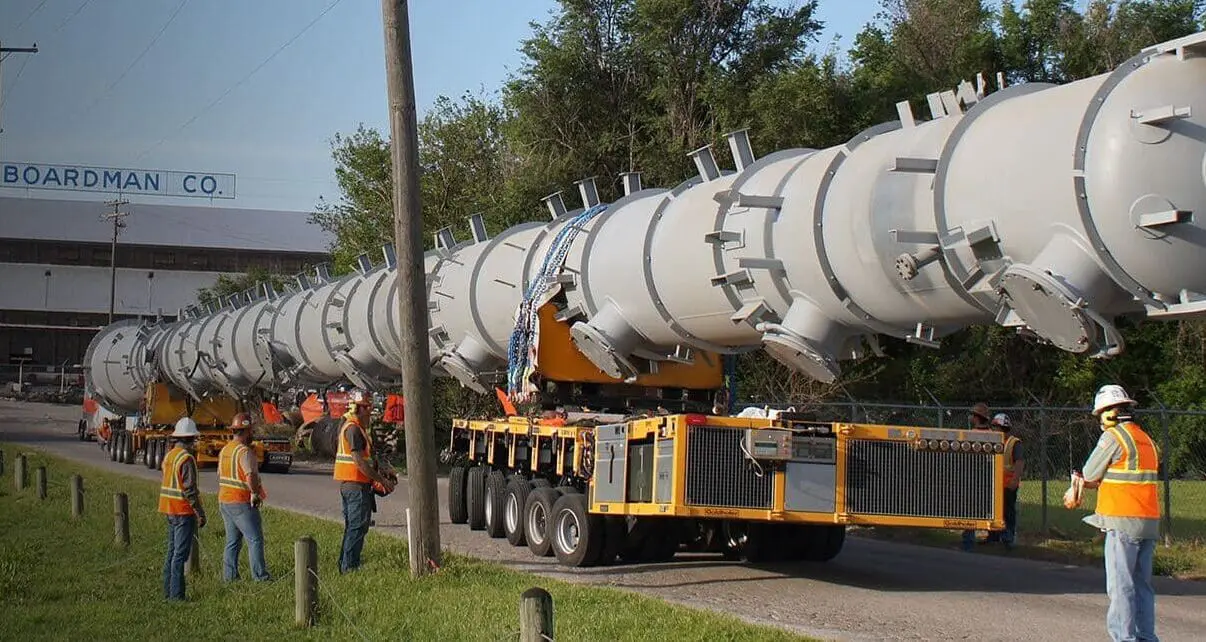
When the consequences of a non-conforming vessel are high, the fabricator’s track record matters as much as their shop capabilities. When you’re selecting a carbon steel fabricator, choose one that has been in business since 1910. Here is a sample of what Boardman fabricates in carbon steel:
This project might require carbon steel. Your next project may call for something entirely different. Boardman is qualified across the full range of materials your applications may demand. If you need fabrication in any of the following, Boardman has you covered:

With every project completed by Boardman comes a stewardship promise. What does that mean? It can mean whatever you need it to mean for your company, your project, and your definition of success.
We can walk you through every step of the fabrication process, from design to delivery. Or we can take your drawings and deliver what you need on time, within budget, and with minimal involvement required from you or your staff.
That’s the Boardman difference. Isn’t it time you experienced it for yourself?
Boardman ships carbon steel vessels, towers, and process equipment to fabrication clients nationwide. For on-site repairs, alterations, and inspections, Boardman’s field team serves Oklahoma, Texas, New Mexico, Colorado, Arkansas, Missouri, Kansas, and across the country.
Boardman LLC is a heavy metal fabrication company based in Oklahoma City, Oklahoma, in operation since 1910. Boardman fabricates custom industrial equipment for clients in refining, oil and gas, chemical processing, energy, and industrial manufacturing. Every project is backed by active ASME, National Board, AISC, API, and AWS certifications and a documented quality management system.
Engineers and procurement teams frequently ask these questions when evaluating carbon steel as a material and Boardman as a fabrication partner.
It is used to build ASME pressure vessels, process towers, drums, separators, gas treaters, and heavy plate assemblies for refining, oil and gas, chemical processing, and industrial manufacturing. Its strength, weldability, and cost efficiency make it one of the most common materials for code-compliant process equipment.
It is a carbon steel grade tested to resist hydrogen-induced cracking in wet H2S service environments. It is commonly specified for refinery and upstream gas processing applications. Your project specification or applicable code will indicate whether it is required.
ASME Section VIII Division 1 and Division 2. Division 1 covers standard pressure ranges. Division 2 applies to higher-pressure designs requiring more rigorous analysis and documentation. Boardman holds certifications under both.
Your process fluid, operating temperature and pressure, corrosion requirements, and project specification drive the decision. Carbon steel suits most refinery and gas processing service. Stainless steel is typically required when elevated corrosion resistance or material purity is specified.
Yes. Boardman fabricates directly from customer-supplied drawings, or provides engineering and design support when drawings are not yet complete.
Boardman’s plate rolling equipment handles material from gauge thickness up to 3 inches thick. Heavy plate fabrication and large-diameter vessels are a core capability. Contact Boardman with your specific requirements to confirm scope.
The U-1 data report, mill certifications, weld maps, inspection records, and National Board registration where applicable. Documentation for non-code fabrication is addressed per your project specification.
If you are evaluating fabrication partners for a carbon steel pressure vessel, trayed tower, column, or custom process equipment project, Boardman’s carbon steel fabrication capabilities cover the technical depth, code compliance, and stewardship your application requires. In operation since 1910, certified under ASME, National Board, AISC, API, and AWS, and committed to keeping your project on schedule and fully documented.