


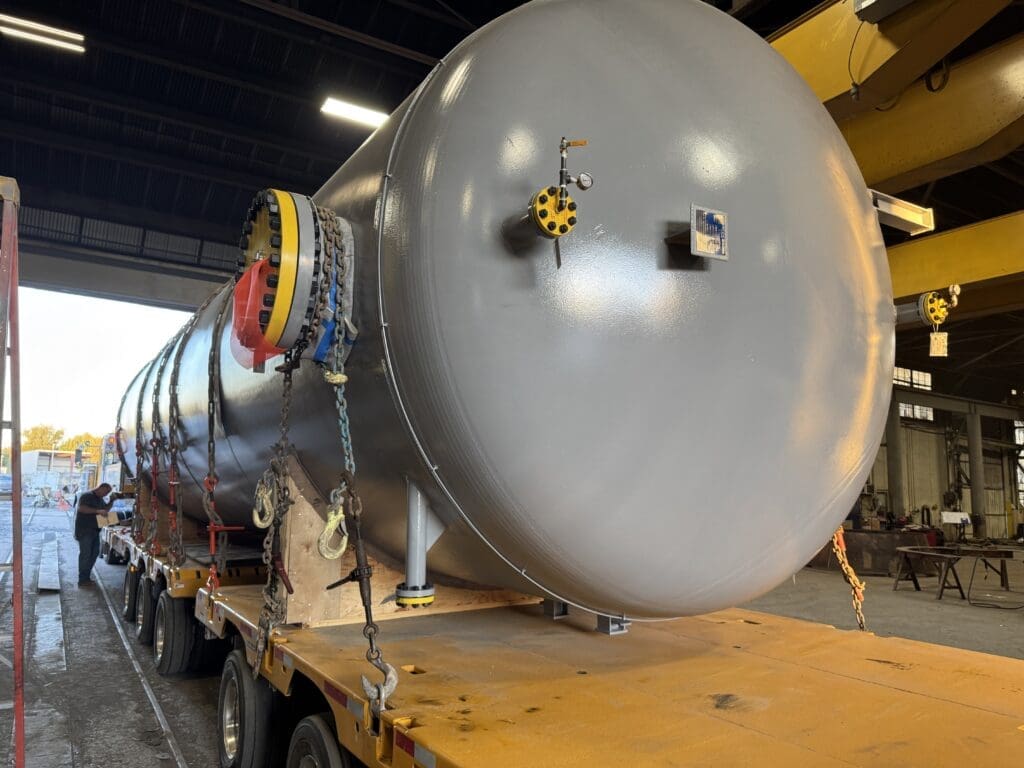


A pressure vessel does not “sort of” fail. It does not give you the courtesy of a gradual breakdown like a worn belt or a tired motor. When a pressure vessel failure happens, it can be sudden, violent, and unforgiving, turning a controlled industrial process into a split-second emergency.
The most chilling part is that many catastrophic events start quietly. A hairline crack. A weakened weld. A pressure reading that seems “slightly off” but not alarming. A maintenance shortcut taken because production cannot slow down. And then one day, the system reaches a tipping point. In the blink of an eye, a routine shift becomes a full-scale incident that affects equipment, operations, and human lives.
This is not meant to alarm you without purpose. It is meant to help you identify warning signs early, understand the causes of catastrophic failure, and protect your facility with intentional, proven safeguards.
What Does “Pressure Vessel Failure” Really Mean and Why Does it Happen So Fast?
Pressure vessels are designed to contain gases or liquids at pressures significantly higher than those of the surrounding environment. That pressure difference is what makes them useful, but it is also what makes them dangerous.
A pressure vessel failure occurs when the vessel can no longer safely contain that internal pressure. At that point, the stored energy is released quickly and aggressively. Even a small breach can escalate, because pressure will exploit the weakest point and expand the damage.
When the outcome is severe, it becomes a catastrophic pressure vessel failure, the type of failure associated with explosions, major structural damage, and serious injury risks. While these worst-case scenarios are not everyday occurrences, they do happen often enough in industrial environments to warrant constant attention.
Pressure vessels do not typically fail “out of nowhere.” In many cases, a vessel sends signals long before the breaking point arrives. The challenge is knowing what to look for and acting before those signals become consequences.
The Common Causes Behind Catastrophic Pressure Vessel Failure
A catastrophic incident is rarely a single-point mistake. More often, it is a chain of factors stacking up over time. Here are the biggest contributors to pressure vessel failure in real-world operations:
1. Corrosion That Eats Away from the Inside
Corrosion is one of the most persistent threats in industrial environments. Internal corrosion can thin the vessel wall until it cannot safely withstand operating pressure. External corrosion can also weaken structural integrity, especially in humid environments or where chemicals are present.
The danger is that corrosion often progresses out of sight. By the time surface damage is noticeable, internal loss may already be significant.
2. Overpressure Events and Failed Safety Controls
Pressure relief valves, gauges, sensors, and shutdown systems exist for one main reason: to prevent the vessel from exceeding design limits. But if relief devices are undersized, poorly maintained, or malfunctioning, pressure can exceed safe limits.
Even short spikes can cause permanent weakening, increasing the likelihood of future pressure vessel failure.
3. Fatigue From Repeated Pressure Cycles
Some vessels go through constant loading and unloading. Pressure up, pressure down, day after day. Over-cycling can create fatigue cracks, especially near welds, nozzles, and other stress-concentration points.
Fatigue damage is sneaky because it can be microscopic until it is suddenly not.
4. Welding Defects and Fabrication Flaws
Not every problem begins in the field. If the original fabrication includes weld discontinuities, incomplete penetration, or poor fit-up, those defects can become failure points under long-term stress.
Even if a vessel has been running “fine,” manufacturing-related weaknesses can show themselves later, particularly when operating conditions change.
5. Improper Repairs or Modifications
It is tempting to treat repairs as fast fixes. But pressure vessels are not forgiving of “close enough” workmanship.
A patch weld, a replacement nozzle, or a field modification that is not engineered and executed properly can create new stress zones. This is one of the most common paths to catastrophic pressure vessel failure because it creates a hidden weakness that may not appear until the vessel is under peak load.
6. Operational Drift and Human Factors
Sometimes failure is not the vessel’s fault—it is the environment it is forced to survive in.
Operating above recommended temperature ranges, pushing pressure limits, skipping inspection intervals, and delaying maintenance all increase risk. These decisions often happen gradually, one small exception at a time, until the vessel is being asked to perform outside its design reality.
The Warning Signs You Should Never Ignore
Pressure vessels do not always “announce” trouble, but facilities often experience indicators that something is shifting. These red flags deserve immediate attention:
- Unusual pressure fluctuations that cannot be explained by process changes
- Recurring relief valve lifting or abnormal venting events
- Vibration, rattling, or new noises near the vessel or connected piping
- Visible bulging, distortion, or deformation of vessel surfaces
- Persistent leaks, staining, or corrosion patterns around seams and welds
- Temperature anomalies, especially near nozzles or welded joints
- Unexpected inspection findings, even if they seem minor at first
One of the most dangerous mindsets is assuming a warning sign will stay small. In the world of pressure vessel failure, small problems are often the beginning of large ones.
What Happens When a Pressure Vessel Fails
A catastrophic pressure vessel failure is not just an equipment issue. It becomes an operational crisis.
Depending on the process, the aftermath may include:
- Severe facility damage from blast force or shrapnel
- Emergency shutdowns that stop production instantly
- Fire hazards if flammable gases or liquids are involved
- Toxic release risks in chemical or industrial processing environments
- Costly regulatory scrutiny and required corrective action
- Long-term downtime, loss of inventory, and delayed orders
- Reputation damage with customers, partners, and internal teams
Even in non-explosive failures, the disruption is often massive. Repairs become complex, operations are interrupted, and the pressure to “get back online” creates an environment where rushed decisions can make the problem worse.
Just remember that the cost of prevention is almost always lower than the cost of failure.
Building a Culture That Prevents Failure Instead of Reacting to It
Avoiding pressure vessel failure is not about being lucky. It is about making vessel safety part of routine operations. The strongest prevention strategy is layered, combining design knowledge, inspection discipline, and real accountability.
1. Take Inspection Seriously (Even When Things Look Fine)
Inspections should do more than “check the box.” Internal and external inspections, thickness readings, weld evaluations, and non-destructive testing are the tools that catch risk while it is still manageable.
A smart facility treats inspections like early warning radar, not a formality.
2. Stay Ruthless About Documentation
When you know the vessel’s history, you can predict its future. Tracking pressure events, repairs, operating changes, corrosion rates, and previous findings makes it far easier to detect patterns.
The facilities that struggle most after an incident are often the ones without clear records.
3. Train Teams to Spot Trouble Early
Operators and maintenance teams are often the first ones to notice subtle changes: a smell, a sound, a vibration, a gauge behavior that does not match normal trends.
When employees are trained and empowered to report abnormalities quickly, the window for prevention stays open.
4. Treat Repairs Like Engineering Decisions
A pressure vessel is not the place for improvisation. Every repair should be properly designed, properly executed, and properly inspected. Quick work that bypasses safe processes may feel efficient now, but it can quietly create tomorrow’s disaster.
The Most Important Question: “Are You Confident, or Are You Hoping?”
A facility can run for years without a major event but still be a single weak weld away from disaster. That is what makes pressure vessel failure so unsettling. It can live quietly beneath the surface of normal operations until pressure, fatigue, corrosion, or time finally wins.
Catastrophic failures are rarely random. They are usually predictable in hindsight because warning signs were present. The goal is to make those signs visible before they become irreversible.
If your team is relying on assumptions like “it has always been fine,” or “it passed inspection last time,” it may be time to shift from hoping to knowing.
Do Not Wait for the Moment You Cannot Undo
When the goal is preventing catastrophic pressure vessel failure, the smartest move is to act while the vessel is still intact, the schedule is still under your control, and the risk is still manageable. That means getting the right expertise involved before you are dealing with an emergency, not after.
If you want a true safety partner to help evaluate risk, improve reliability, and keep your operation protected, Boardman can help you take the next step with confidence. Reach out to Boardman to discuss inspection support, repair solutions, or fabrication guidance designed to keep your facility safe and operational when it matters most.
